
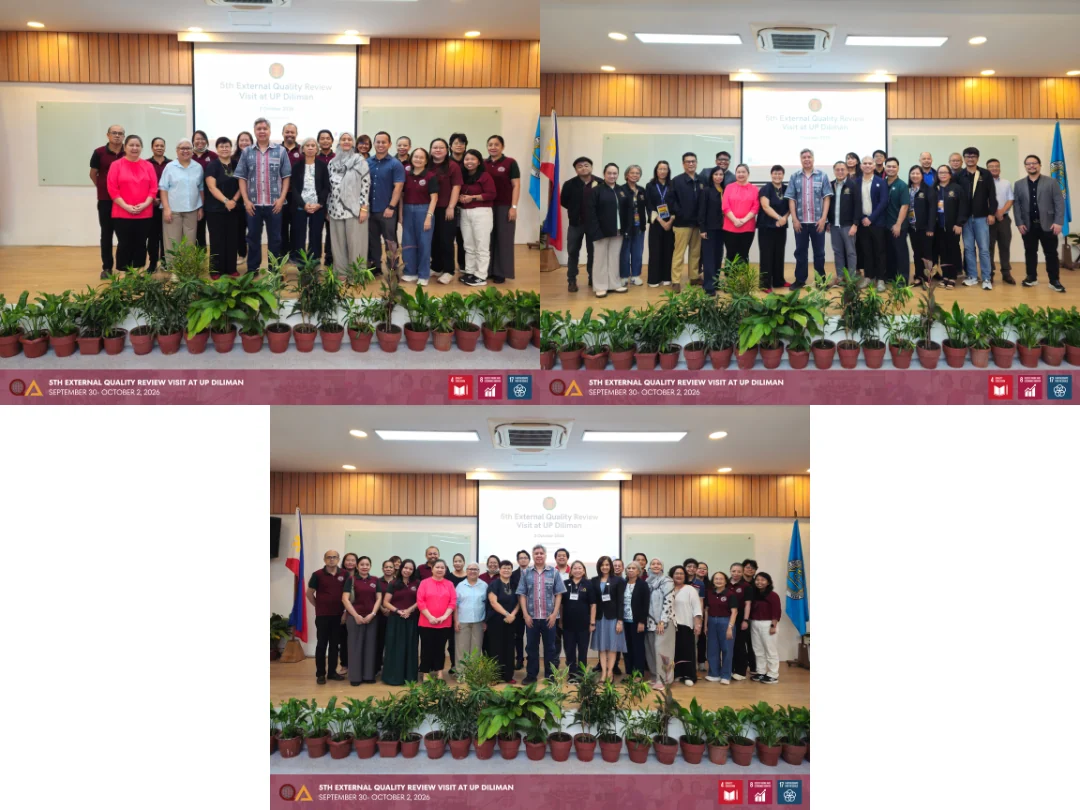
The Master of Science (Geography), Bachelor of Arts (Philosophy), and Bachelor of Public Administration programs of the University of the Philippines Diliman successfully completed the 5th External Quality Review (EQR) Visit held from September 30 to October 2, 2026.
The three degree programs serve distinct academic and professional purposes, from advancing geographical research and understanding complex ideas to preparing students for careers in education, private industries, and public service. Reviewing them presented an opportunity to examine how their curricula and learning experiences prepare graduates to apply their knowledge in their respective fields and respond to the needs of the communities and sectors they serve.
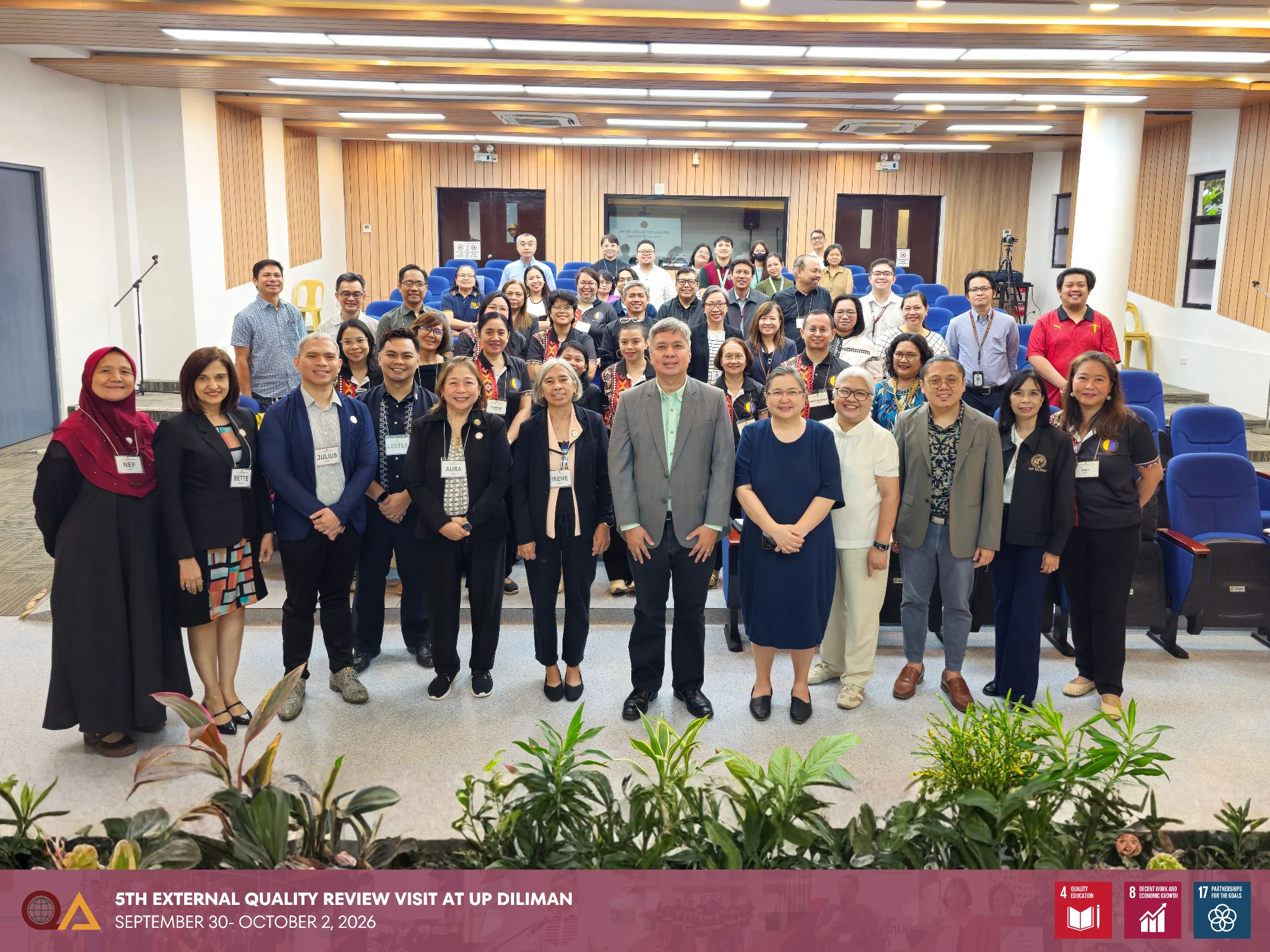
The External Quality Reviewers, UPD Chancellor Edgardo Carlo L. Vistan II, UPD QAO Director Evangeline C. Amor, CSSP Dean Ruth R. Lusterio-Rico, and NCPAG Dean Kristoffer B. Berse posed for a group photo during the opening session.
The review was conducted by an EQR Team composed of academic and quality assurance practitioners from UP Diliman and UP Manila.
Professor Emeritus Irene M. Villaseñor of the Institute of Chemistry served as the Lead External Quality Reviewer (EQR) for the MS Geography program, as well as the Chief of the EQR team. She was assisted by Associate Professor Nefertari A. Arsad of the Institute of Islamic Studies. Academician Maria Aura Teodora C. Matias, former UPD QAO director, led the review of the BA Philosophy program with Associate Professor Bhabita V. Murjani of the UP Manila College of Dentistry; Dr. Murjani is also the director of the UP Manila QA Office. For the Bachelor of Public Administration program, Associate Professor Julius Andrew P. Nuñez of the UP Manila College of Arts and Sciences served as the Lead EQR, alongside Assistant Professor Lester John C. Lim who is the College Secretary of the College of Home Economics.
Observers
Throughout the three-day visit, stakeholders of the degree programs, including students, alumni, employers, and academic and administrative staff, participated in a series of interviews with the EQRs, sharing their perspectives on program implementation, strengths, and areas for further improvement. The discussions gave the EQR Team a closer look at how the programs have translated their intended outcomes into actual academic experiences and practices.
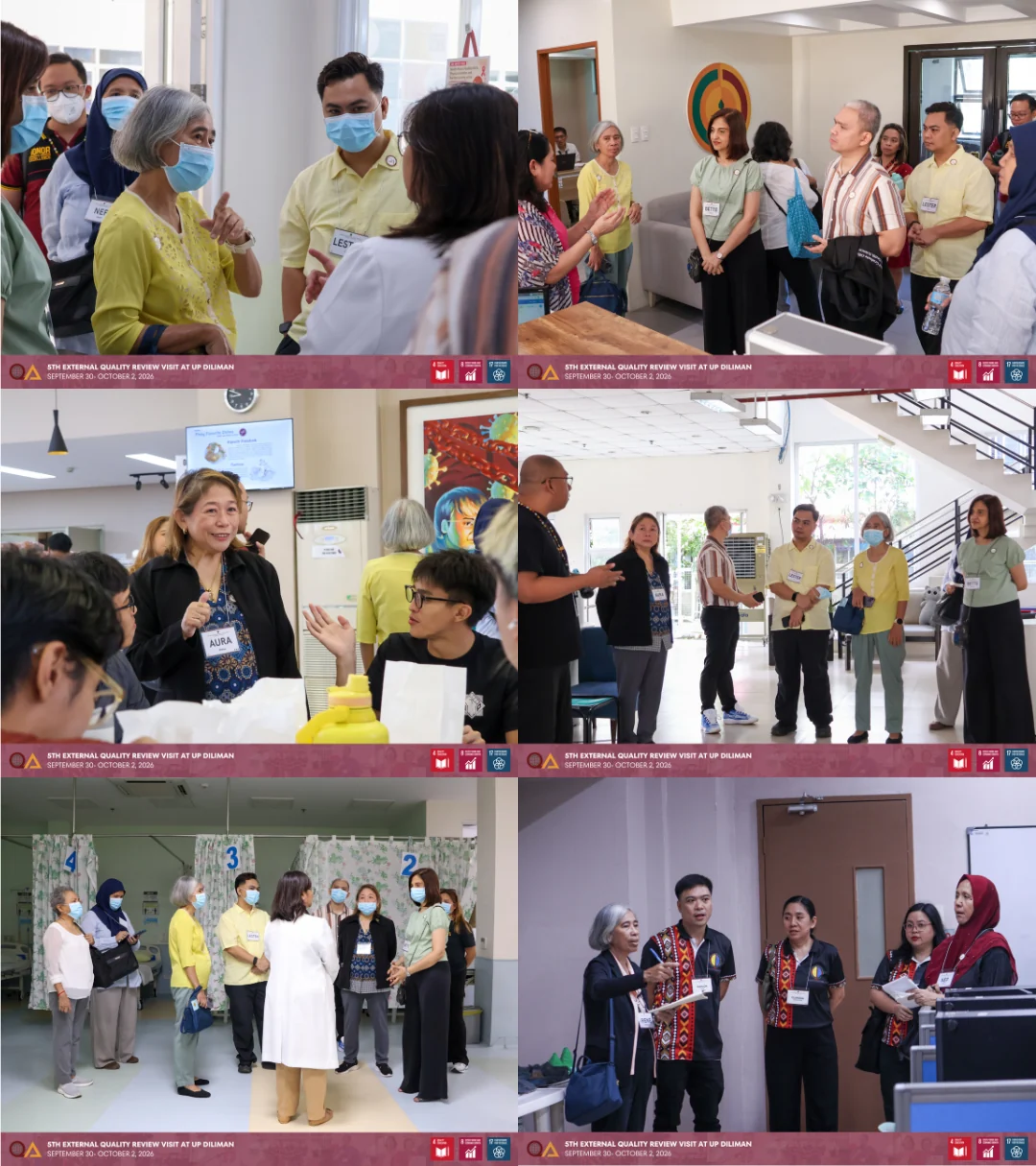
The review also extended beyond the individual programs through the conduct of program-level and university-level tours of facilities. The tours allowed the reviewers to examine the physical resources and learning environments supporting program delivery, while the university-level tour organized by the UPD QAO provided a broader view of the resources and services available to stakeholders. Together with the stakeholder interviews, these activities helped the EQR Team assess the wider institutional support underpinning the programs.
The External Quality Reviewers conducted tours of the facilities at the program and university levels as part of the review visit.
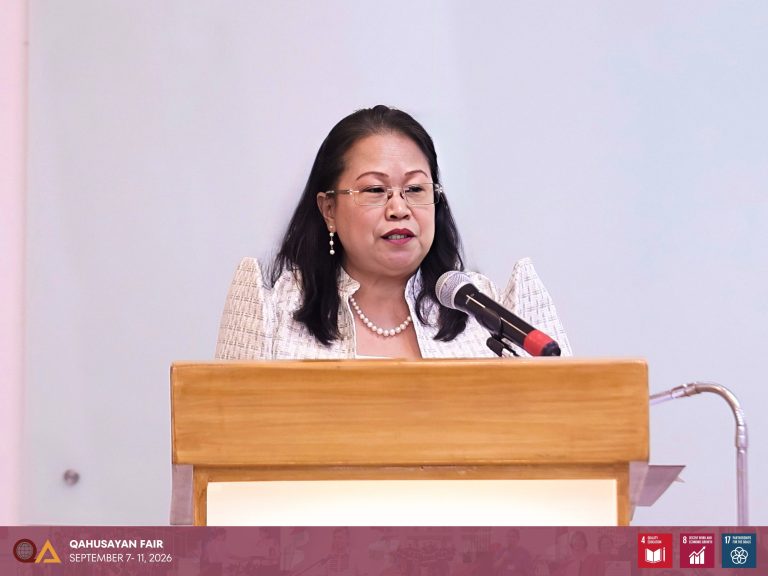
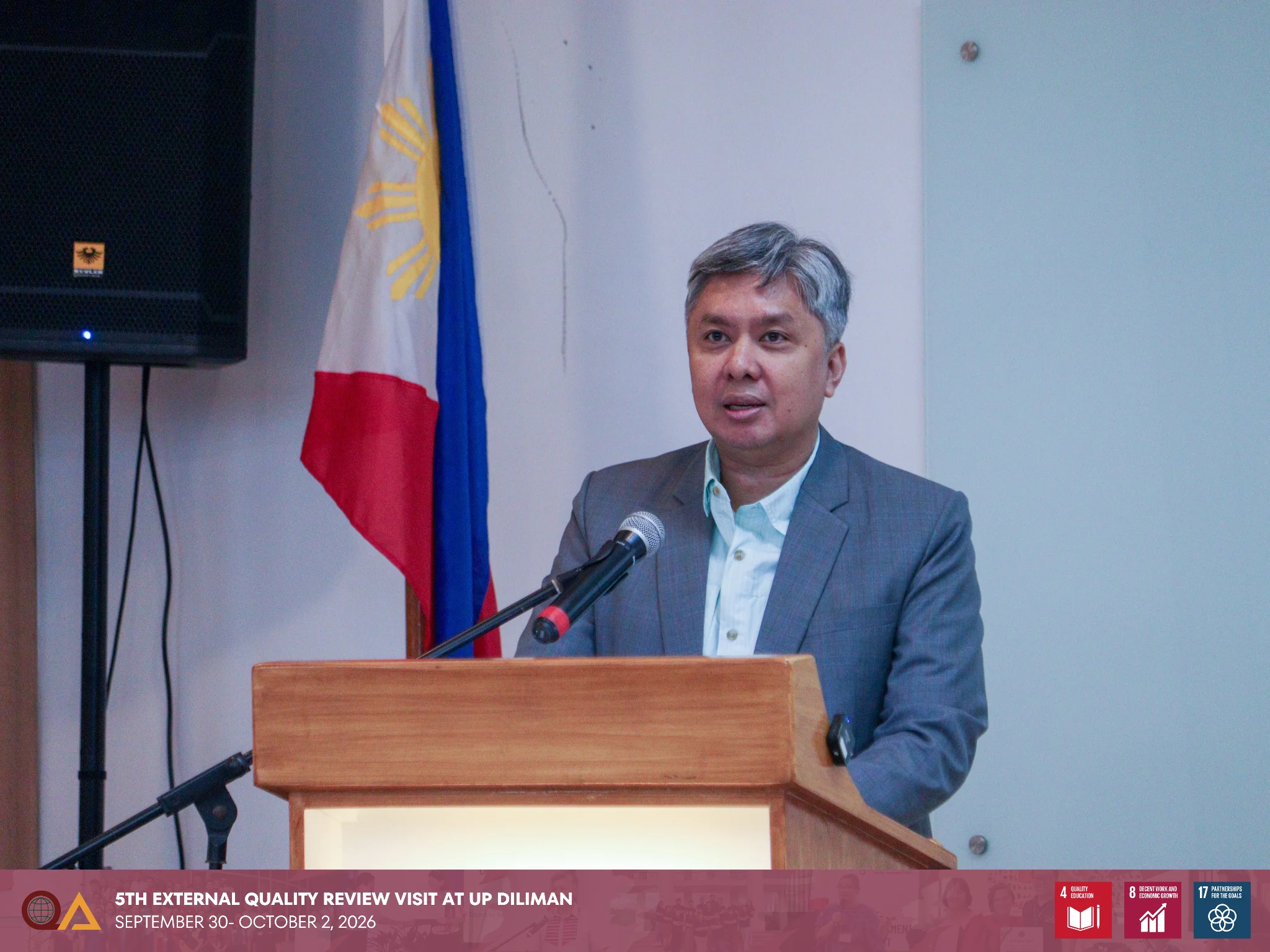
During the opening session, UP Diliman Chancellor Edgardo Carlo L. Vistan II described the external quality review as part of the University’s continuing commitment to quality and improvement. He encouraged the programs to approach the process with openness, noting that an external perspective can help the University examine its academic programs, services, systems, and processes in ways that may not always be visible from within.
UPD Chancellor Edgardo Carlo L. Vistan II delivered the opening message during the opening session of the 5th External Quality Review visit.
The review visit was supported by College of Social Sciences and Philosophy Dean Ruth R. Lusterio-Rico, National College of Public Administration and Governance Dean Kristoffer B. Berse, and UPD QAO Director Professor Evangeline C. Amor, together with the department chairpersons, program coordinators, and academic and administrative staff involved in the delivery of the degree programs.
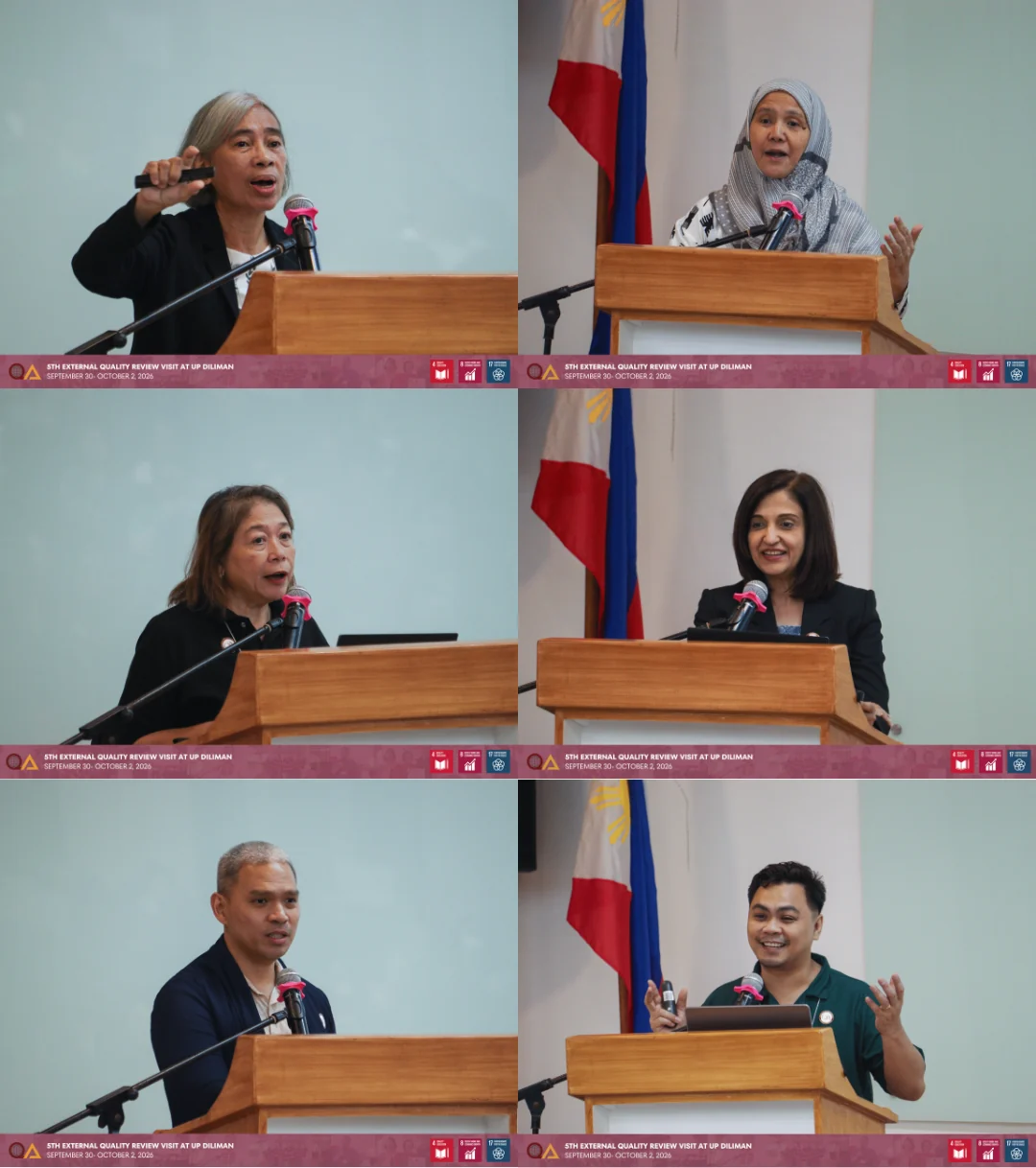
During the closing session, the EQRs presented preliminary findings for each program, highlighting key strengths and areas for improvement. Professor Emeritus Villaseñor then provided a synthesis of the initial observations from the three-day visit and discussed the succeeding steps in the EQA process.
(From L to R: Prof. Emer. Irene M. Villaseñor, Assoc. Prof. Nefertari Arsad, Academician Maria Aura Teodora C. Matias, Assoc. Prof. Bhabita V. Murjani, Assoc. Prof. Julius Andrew P. Nuñez, and Asst. Prof. Lester John C. Lim)
The External Quality Reviewers presented the preliminary findings for their assigned programs during the closing session of the 5th External Quality Review Visit.
In his closing message, Chancellor Vistan thanked the EQRs and the degree-granting units for their time, preparation, and engagement throughout the visit. He underscored that the value of EQA extends beyond the review itself, as the insights gathered should inform the work that follows.
Chancellor Vistan also recognized the academic and administrative staff who prepared the required documents, coordinated the activities, and supported the review behind the scenes. He encouraged the three programs to build on the experience by recognizing the strengths they have developed while remaining attentive to opportunities for further improvement.
In her wrap-up presentation and closing message, Chief EQR Professor Emeritus Villaseñor underscored that a university’s reputation does not place it beyond scrutiny. Even an institution with UP Diliman’s standing must remain willing to examine its practices, recognize gaps, and learn from external perspectives. She emphasized that the review reflects not a question of whether the University has achieved excellence, but how it can sustain and further strengthen it.
With the completion of the 5th EQR Visit, the three programs move forward with the findings and recommendations arising from the review. Upon receipt of the findings later this year, they will outline plans that they will implement within the next five years. The process marks another step in UP Diliman’s continuing efforts to strengthen quality across its academic programs and the institutional systems and processes that support them.
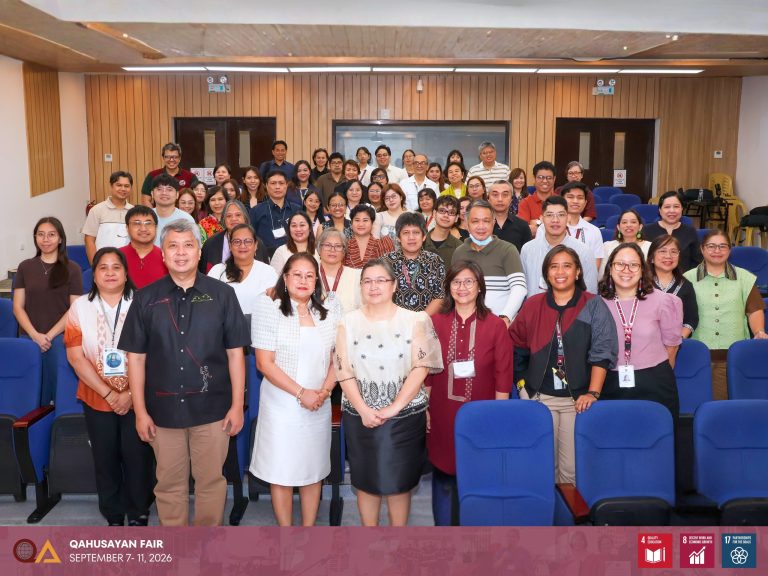
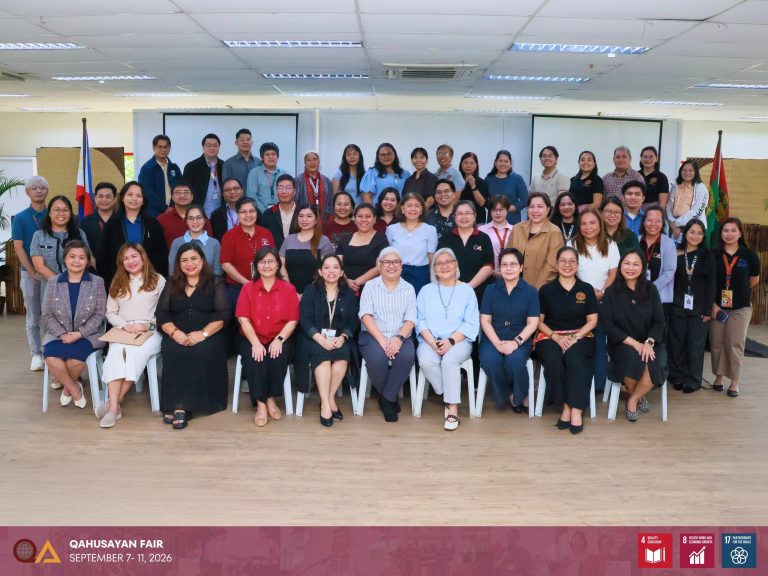
Representatives from the Master of Science (Geography), Bachelor of Arts (Philosophy), and Bachelor of Public Administration posed for group photos with UPD Chancellor Edgardo Carlo L. Vistan II, Vice Chancellor for Academic Affairs, UPD QAO Director Evangeline C. Amor, and the External Quality Reviewers.
For guidance on the conduct of EQA activities, contact the UP Diliman QAO External Quality Assurance Team at eqa_qao.upd@up.edu.ph.

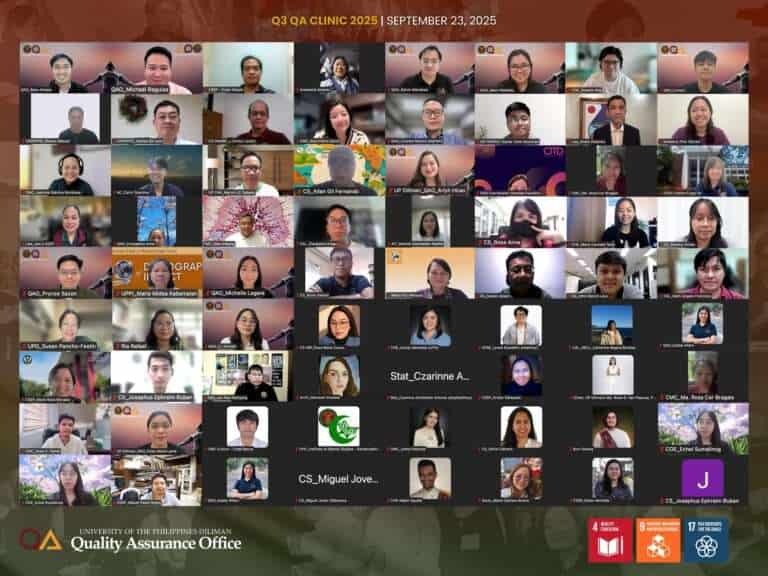
To wrap up the third quarter of the year, the UP Diliman Quality Assurance Office (UPD QAO) conducted the Quarter 3 Quality Assurance (QA) Clinic last September 23, Tuesday via Zoom Conference Meeting, gathering 52 participants from 16 degree-granting units across the UPD academic clusters.
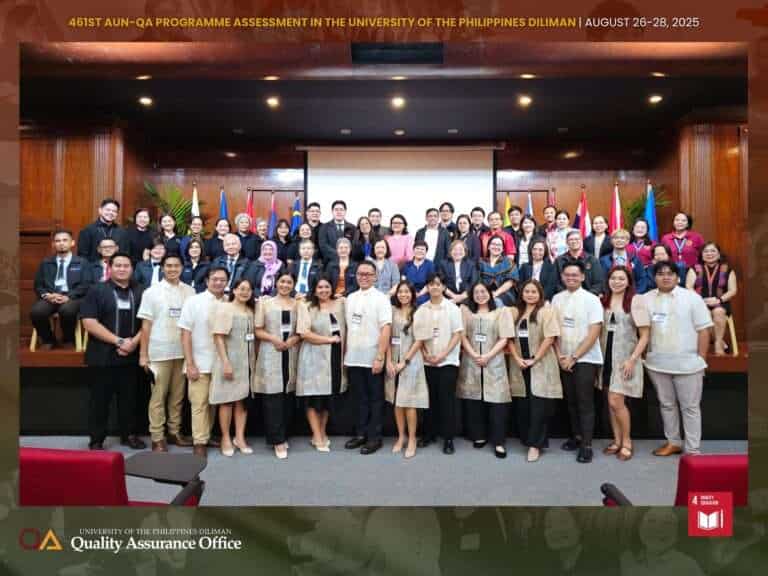
Four (4) undergraduate degree programs of the University of the Philippines Diliman (UPD) successfully completed the 461st ASEAN University Network-Quality Assurance (AUN-QA) Programme Assessment held from August 26 to 28, 2025.
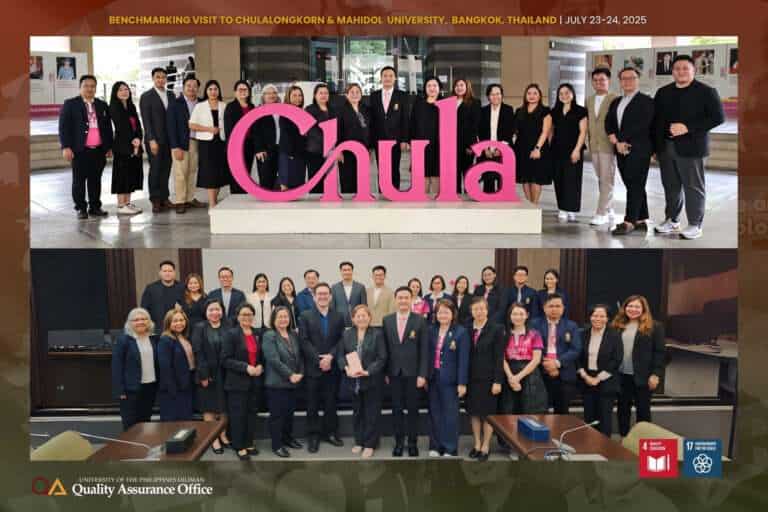
The UP Diliman Quality Assurance Office (UPD QAO), together with the UPD Quality Assurance Committee (QAC), conducted a benchmarking visit to two of Thailand’s top universities—Chulalongkorn University and Mahidol University—on July 23–24, 2025.
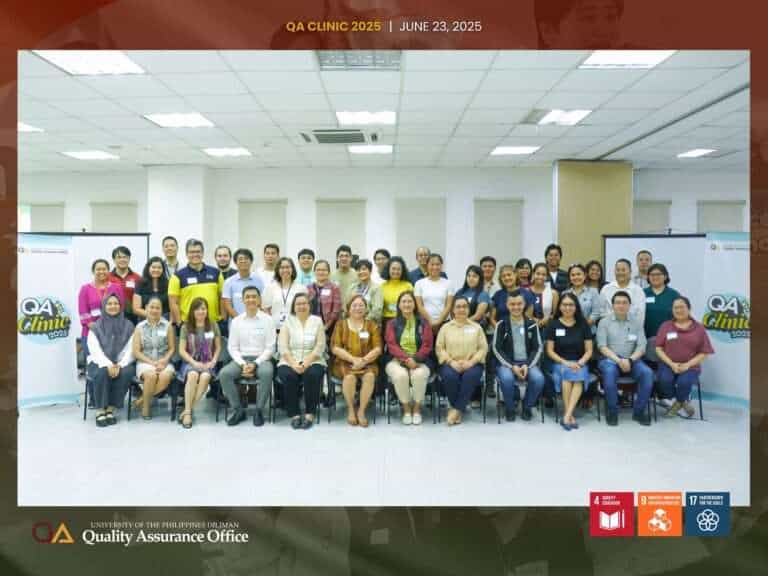
Banking on the successful 100% iAADS submission of UP Diliman for the 2024 cycle, the UP Diliman Quality Assurance Office (UPD QAO) brought together 59 academic unit heads and QA Officers from 37 degree-granting units (DGUs) in the recently held QA Clinic at the National Institute of Molecular Biology and Biotechnology (NIMBB) last June 23, 2025.
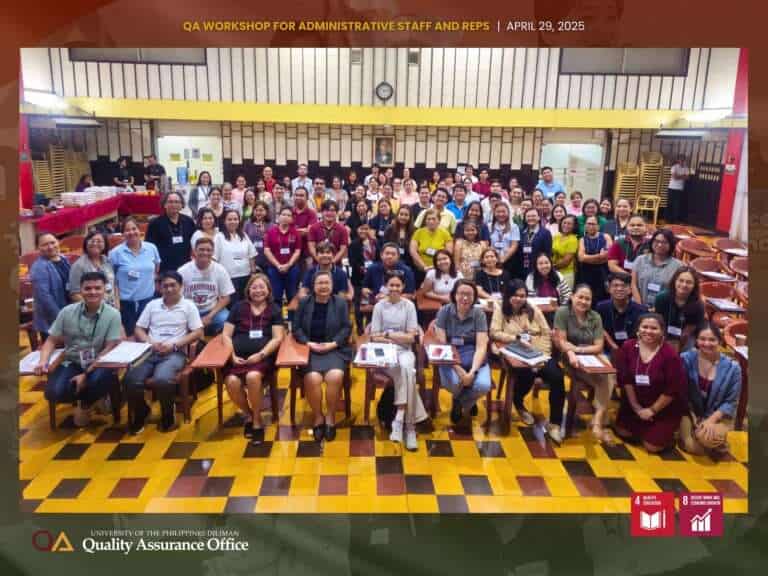
Throughout April and May 2025, the UP Diliman Quality Assurance Office led a series of workshops, forums, and dialogues for staff, project leaders, and students with the objective of empowering the UP community to strengthen QA practices across academic and administrative processes.
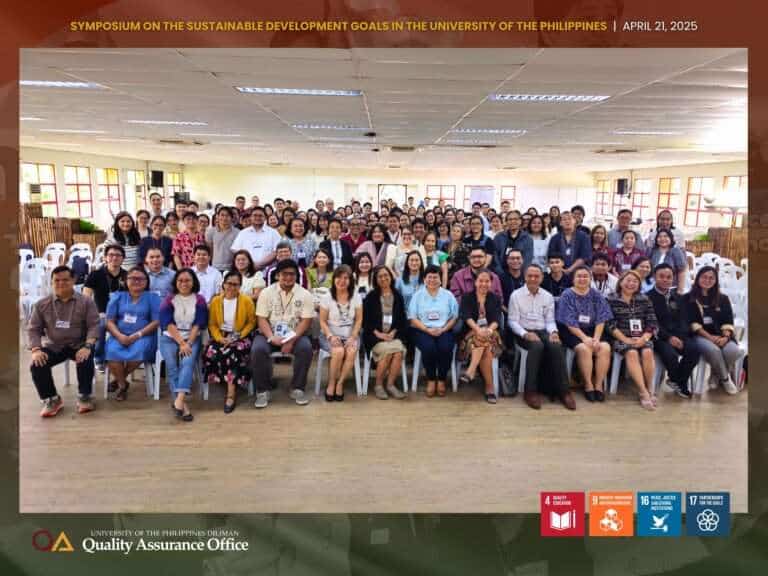
The symposium brought together UP administrators, QA officers, and support staff to reflect on the University’s contributions to the SDGs and explore ways to further align academic and research efforts with the UN 2030 Agenda.